Poster colour lies to you a little while it is wet. A dark blue you mixed with real care dries a shade paler. A soft yellow settles into something heavier. The page you leave on the table is never quite the page you come back to. Anyone who grew up with a box of poster colours, as I did, learns this sooner or later, and usually learns it more than once.
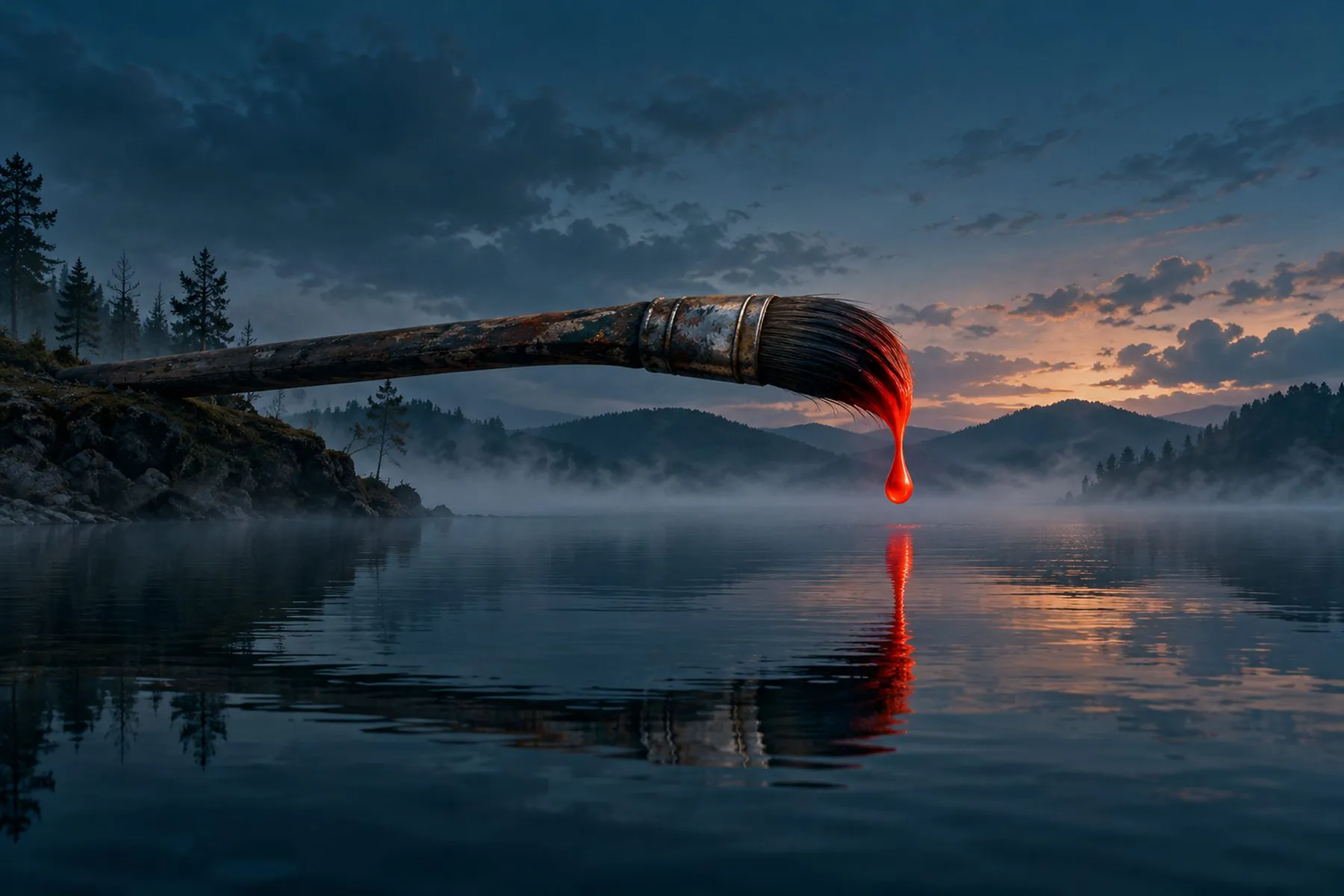
There is a plain reason for it. Poster colour is gouache, a chalky, opaque paint that dries completely flat. While it is wet, the water catches the light one way. Once the water is gone, the dry pigment scatters it another way, so dark tones rise and pale tones sink. Painters who use it keep a sheet of dried samples beside the palette, because matching a colour while it is wet almost always misses.
So the paint teaches you to wait. You drop the brush into the jar of cloudy water, you leave the paper alone, and you come back later with fresh eyes. Only then do you decide whether you like it. For a long time I thought of that wait as a nuisance. I have come to think it was part of the judgement all along.
Almost every tool I use now has taken the wait away. A design tool shows the final pixel the moment I place it. AI hands me a finished-looking screen before my tea has cooled. Nothing is ever wet any more. Everything arrives already dry, already polished, already asking to be approved.
I am a little suspicious of that, and I think the reason is simple. The moment right after making something is the moment you love it most. You are not really seeing the work yet. You are seeing what you meant. The idea is still warm in your head, and it quietly fills in every gap on the screen.
Wet paint shows you what you meant. Dry paint shows you what you made.
The distance between those two is where a lot of design mistakes hide, mine included. A flow feels obvious because you know where everything is. A label makes sense because you wrote it. A colour looks calm at midnight and anxious the next morning. None of them are wrong in the moment. They are just still wet.
So I have started to think every piece of work needs a drying time, even when the tool does not need one. Sometimes that is a night’s sleep. Sometimes it is just looking at the screen on a phone, in daylight, after doing something else for an hour. The point is not the method. The point is to meet the work as a stranger would, once your own intentions have evaporated a little.
With AI the trick runs the other way, and I find that the most interesting part. A generated screen looks dry the moment it appears: clean edges, believable text, confident colours. But it is the wettest thing on my desk. Nobody has lived with it yet, not even the machine that made it, and the polish hides that. So I try to give anything that arrives looking finished the longest drying time of all, precisely because it does not look like it needs one.
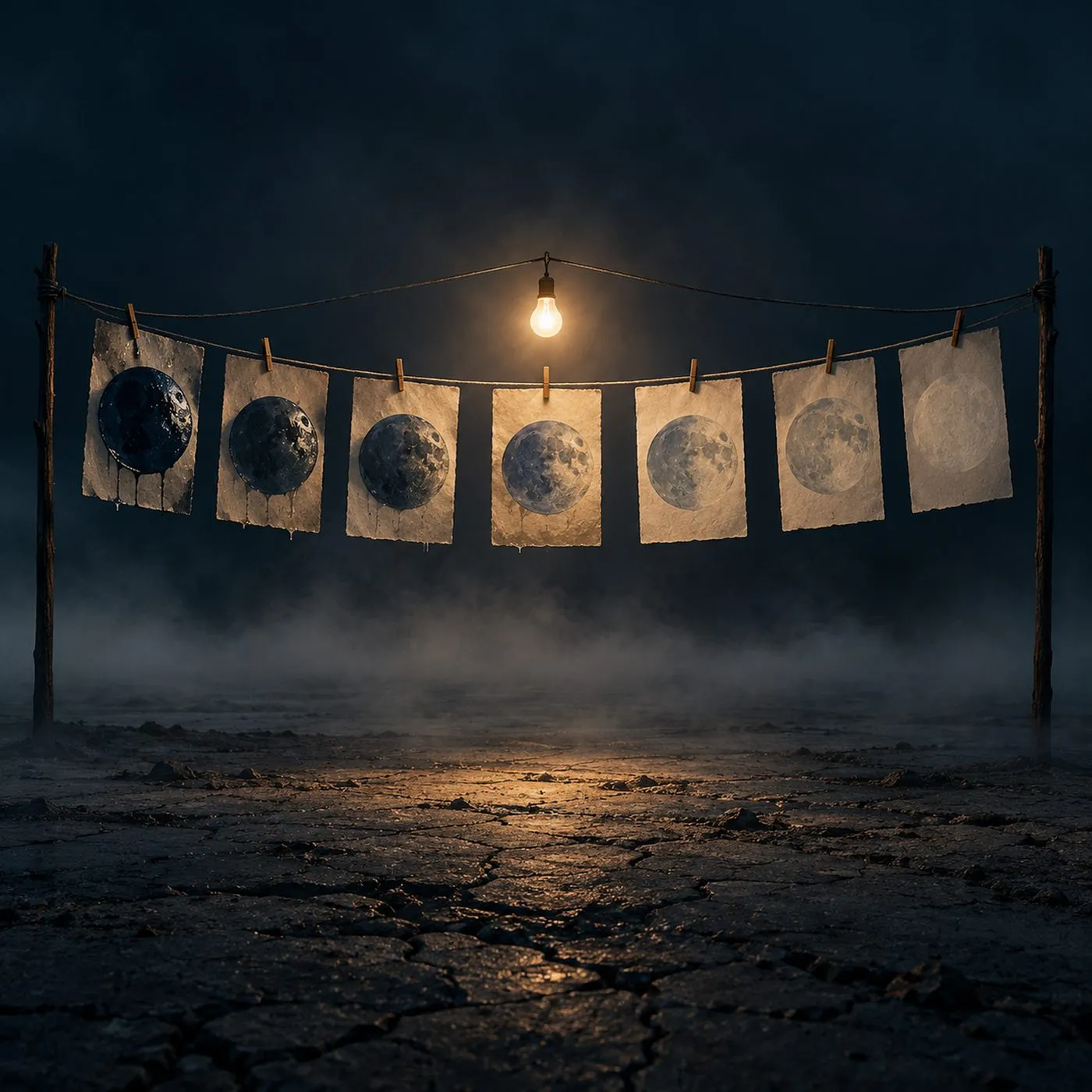
The same moon, a little drier each time.
The same is true of decisions, and this is where I think founders could borrow something from a child’s paint box. A pricing change, a new hire, a pivot decided late at night all look brilliant while they are wet. That feeling is not a lie, exactly. It is just early. I would not give every decision a night. I would give one to the decisions you will have to live with.
I want to be fair to speed, though. Instant tools are a gift. They let me try twenty versions of something in the time one used to take, and many of those versions teach me things I would never have found by waiting. Waiting can also turn into something less noble. Plenty of us have dressed up fear or perfectionism as patience. I do not want slow tools. I want small slow moments inside fast work.
And I suspect this reaches well past design. First impressions of people are wet paint. So are the things we say in the first minute of an argument, and the opinions we form from one headline. Most of them will dry into something a little different from what we saw. It costs very little to let them.
When I picture all of this, I picture one thing. A child’s painting lying on a table, under a slow ceiling fan, the edges of the paper curling slightly as the water leaves. Nobody is allowed to touch it yet.
The hardest part of painting was never the brush. It was keeping your hands off the picture while it dried.