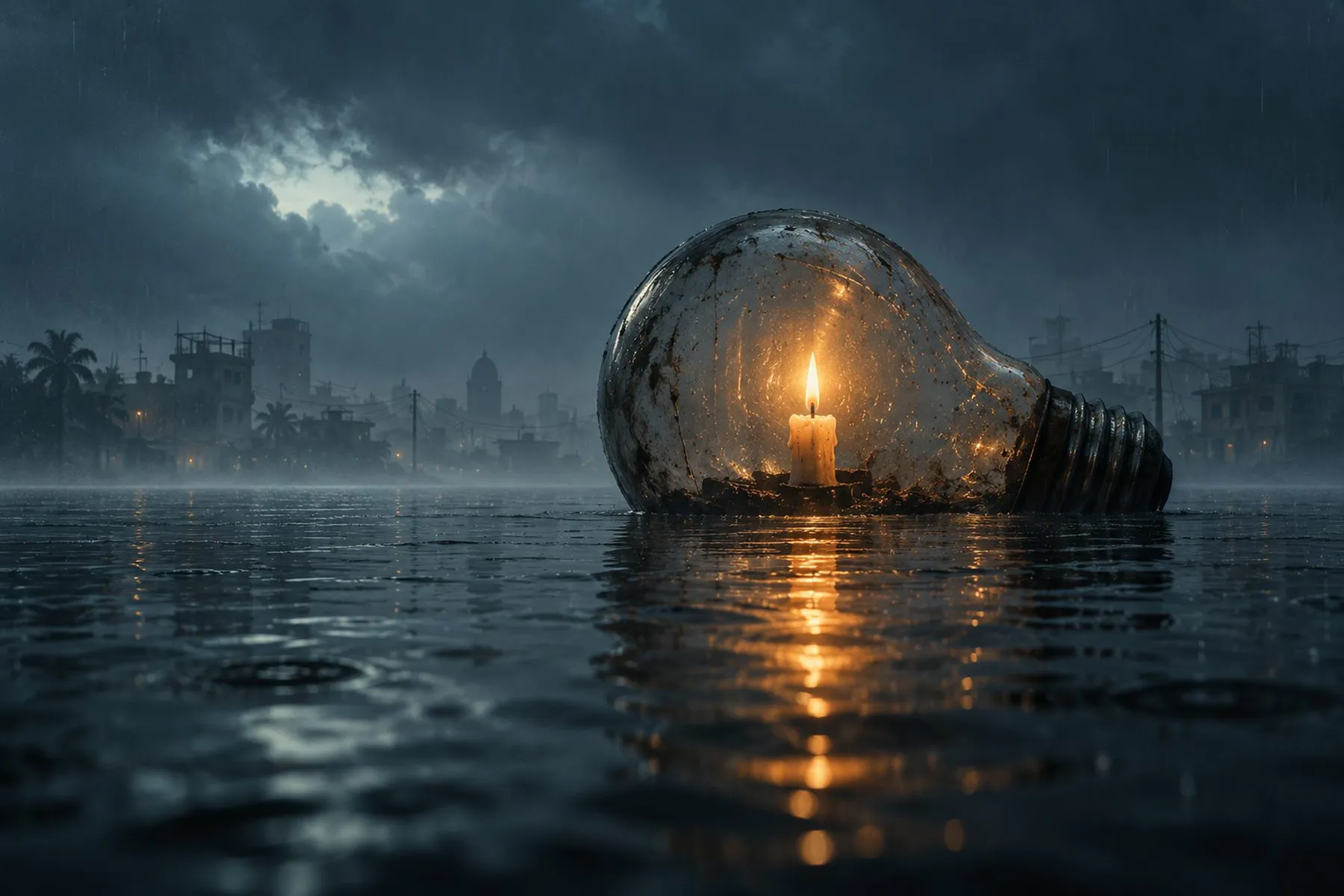
When the power goes here, nobody gasps. The fan above the table slows, the backup battery under the stairs starts its low hum, someone lights a candle more out of habit than need, and the conversation simply carries on. I have always found that small moment beautiful. Nobody designed it, and yet it is one of the best-designed experiences I know: a failure that comes often enough that everyone has learned how to fall softly.
I think about it whenever I work on a payment screen. Most products are built for the day everything works. In design we call that the happy path, the route where every tap goes right, the card is accepted and the confirmation arrives on time. I have come to think designing for failure matters more than designing for that day, and that the best teachers of it are not design books. They are places where things break a lot.
The city I live in is full of these lessons, if you look. When a road floods, a rickshaw appears at the edge of the water as if it had been waiting all along. When an app refuses to open, there is cash folded somewhere in a wallet. When the payment does not go through at the corner shop, the shopkeeper opens a worn notebook, writes your name and a number, and says you can pay tomorrow. None of this is called design. I call it design anyway.
What strikes me is how calm it all is. People here do not treat a failure as an insult. They expect it, a little, and so they keep a smaller version of normal close by. A candle instead of a bulb. A rickshaw instead of a car. A name in a notebook instead of a receipt. Life gets worse for a while, but it never stops.
Engineers have a lovely name for this: graceful degradation. It means a system that, when part of it fails, keeps doing the most important things at a lower level instead of collapsing all at once. A website that loses its fancy animations but still lets you read. A network that slows down but still carries the message. The fan slowing, not the room going dark.
I like the idea a lot. I just think we rarely design for it on purpose.
There is one moment I keep coming back to. You press pay. The little spinner turns. Rain is drumming on the roof, the signal drops for a second, and the screen says something went wrong. The money has left your account, or maybe it has not, and nothing on the screen will tell you which. Anyone who has stood in that moment knows the feeling in the stomach. It is small and it is very old. It is the feeling of not knowing whether you have been cheated.
Anyone can design the day everything works.
That moment, to me, is the real product. Not the onboarding, not the dashboard, not the beautiful home screen. A person decides whether to trust you in the ten seconds after something goes wrong, and most products give those ten seconds to a grey error message written at the end of a sprint by whoever had time left.
I don’t think this is anyone’s fault, exactly. If you build products in a city where the power never goes, where payments almost always clear and the roads almost never flood, failure feels rare. Rare things get designed last. So the error screen becomes an afterthought, and the person who meets it feels like one too.
But failure is only rare for some people. For a large part of the world it is the weather. A product that works beautifully on fast office wifi can feel like a locked door on a cheap phone, on a slow connection, in a language its designers never tested. The founders who will build for the next billion people are going to discover that the unhappy path is where most of their users actually live.
So if I could ask one thing of the founders I work with, it would be this. Design the bad day first. Before the home screen, before the brand colours, sit down and ask what this product does when the payment hangs, when the signal drops, when the person on the other end is tired and frightened and has no one to call. Then make that version kind. I suspect the rest of the product gets better too, because you finally know what matters most.
I don’t want to romanticise any of this. Power cuts cost people real things: spoiled food, lost work, a child studying by phone light. Flooded roads take hours out of lives that do not have hours to spare. Nobody here would choose these failures, and the resilience that grows around them is partly a skill born from unfairness. The lesson is not that breaking is good.
The lesson, I think, is that breaking is honest. It shows you what a system really cares about. When everything works, every product looks trustworthy. It is only when something fails that you see whether anyone thought about you.
People are like this too. You learn who someone is on their bad day, not their good one. The friend you trust most is usually the one you have seen tired, late, wrong, and still kind. I don’t see why products should be any different.
You are still welcome.
The best error message I know is not on a screen at all. It is in that shopkeeper’s notebook. A name, a number, a small promise written in pencil. It tells you that something did not work, that it is not your fault, that you are still welcome, and what happens next. All of it in two words.
Pay tomorrow, he says. And you do.