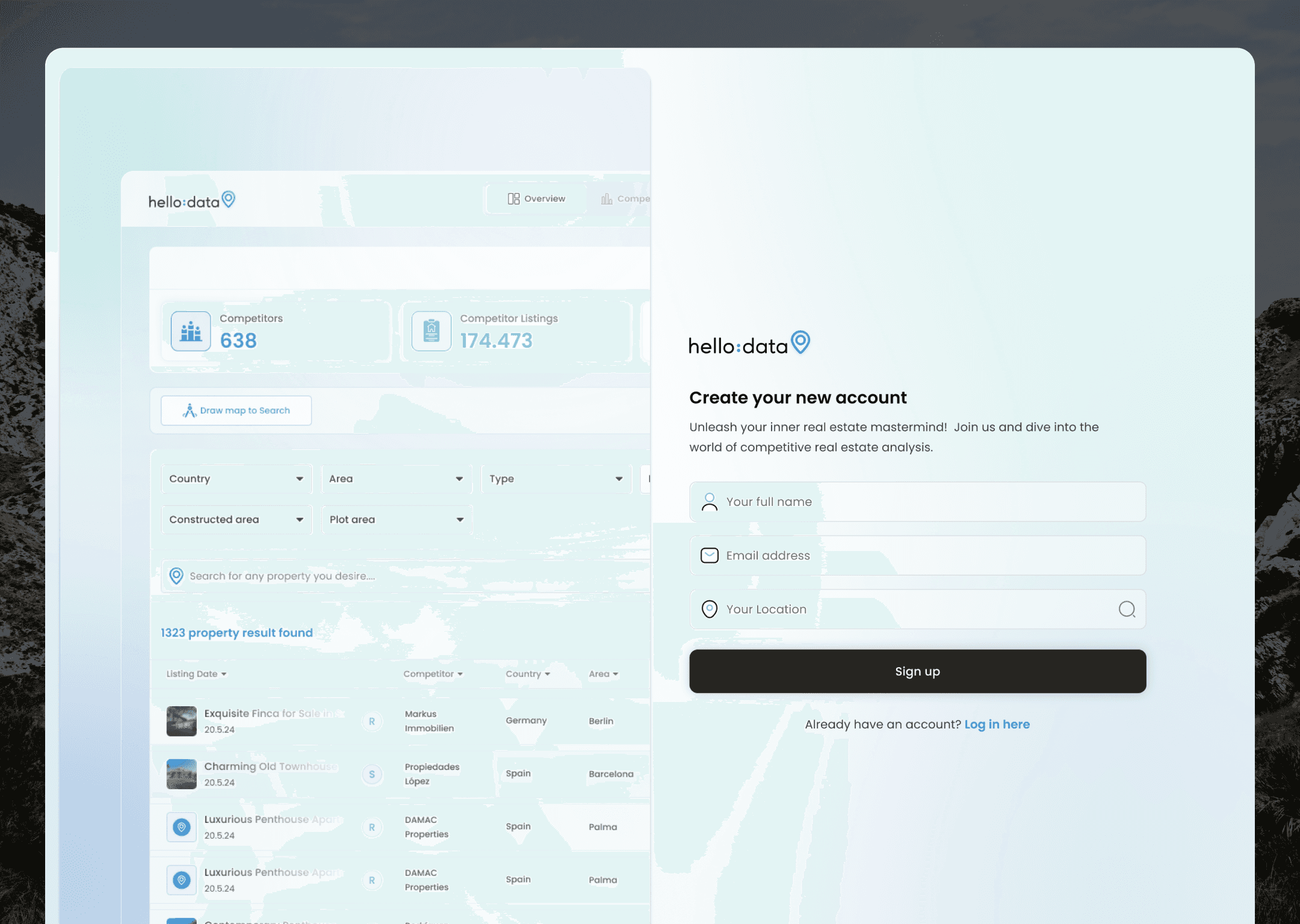
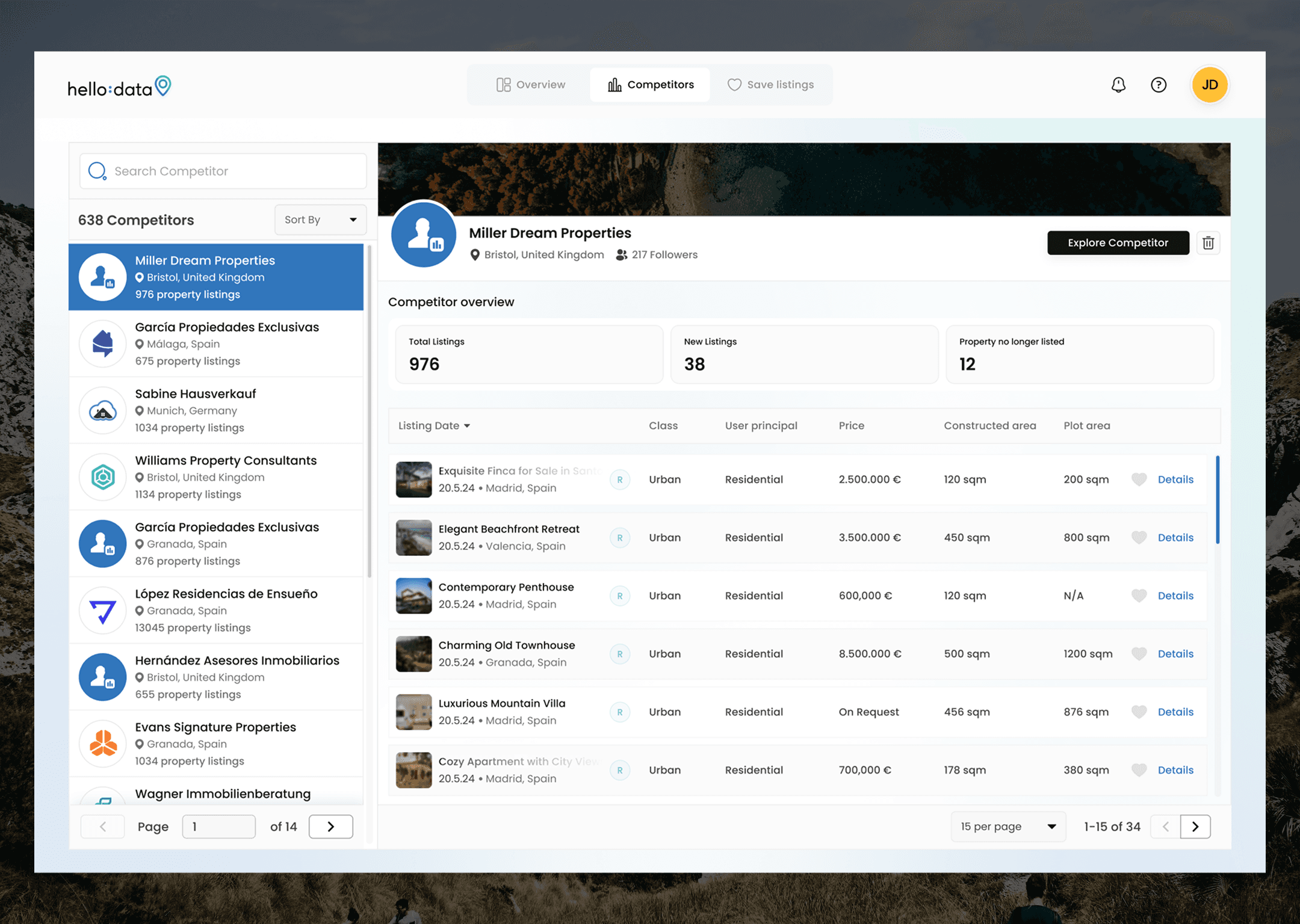
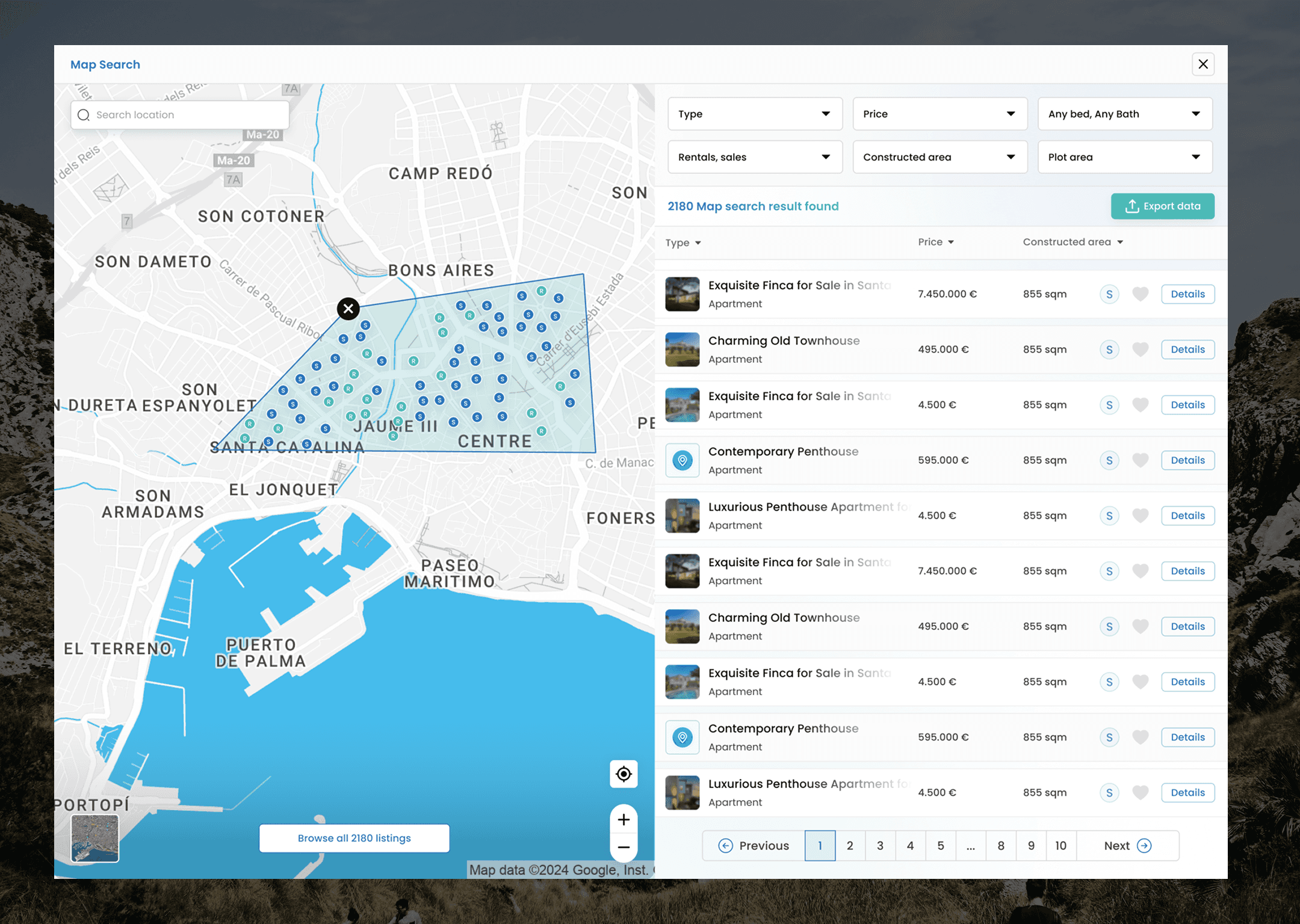
hello:data helps real estate agents keep an eye on their competitors without losing half the morning to it. Agents track competitor listings, save the ones that matter into collections, and send clients a clean link that stays up to date.
The problem
When I joined the project, the first thing I noticed was how much of an agent’s day went into watching other agents. A typical morning meant opening one property portal after another, clicking through listings and taking screenshots, just to know what was new on the market. That was normal for independent agents in Spain.
The time was only part of it. Clients would often find a competitor’s listing on their own and ask the obvious question:
Why didn’t my agent show me this?
Every time that happened, the agent looked less on top of things. Our goal was simple to say and harder to do: let agents follow their competitors without effort, keep what they find organised, and share it with clients in a way that looks professional and honest.
I led the UX from the first research through to the final product.
Why it mattered
Spain real estate market, 2018 to 2030
Market size in US$ billions
| Year | Value |
|---|---|
| 2018 | 43.8 |
| 2019 | 49.5 |
| 2020 | 42.6 |
| 2021 | 42.8 |
| 2022 | 43.1 |
| 2023 | 43.8 |
| 2024 | 44.6 |
| 2025 (projected) | 50.6 |
| 2026 (projected) | 52 |
| 2027 (projected) | 53.9 |
| 2028 (projected) | 55.8 |
| 2029 (projected) | 58.2 |
| 2030 (projected) | 61 |
Spain’s property market is busy and growing, and small agencies compete every day with large firms that have bigger teams and better tools. If you can’t keep up with what your competitors are listing, you’re always a step behind.
So the job wasn’t really to build software. It was to give independent agents a fair chance to keep their clients and grow.
Research
Most of my research came from two places: studies of the Mallorca property market, and the audience data behind MallorcaMagic, the company’s Instagram account with more than 150K followers. Together they showed me the market as a whole and how agents and buyers actually behaved online.
- 150K+Instagram followers analysedMallorcaMagic audience
- 2PersonasBased on agents in Mallorca
- 2h+Per day spent checking competitorsWhat agents told us
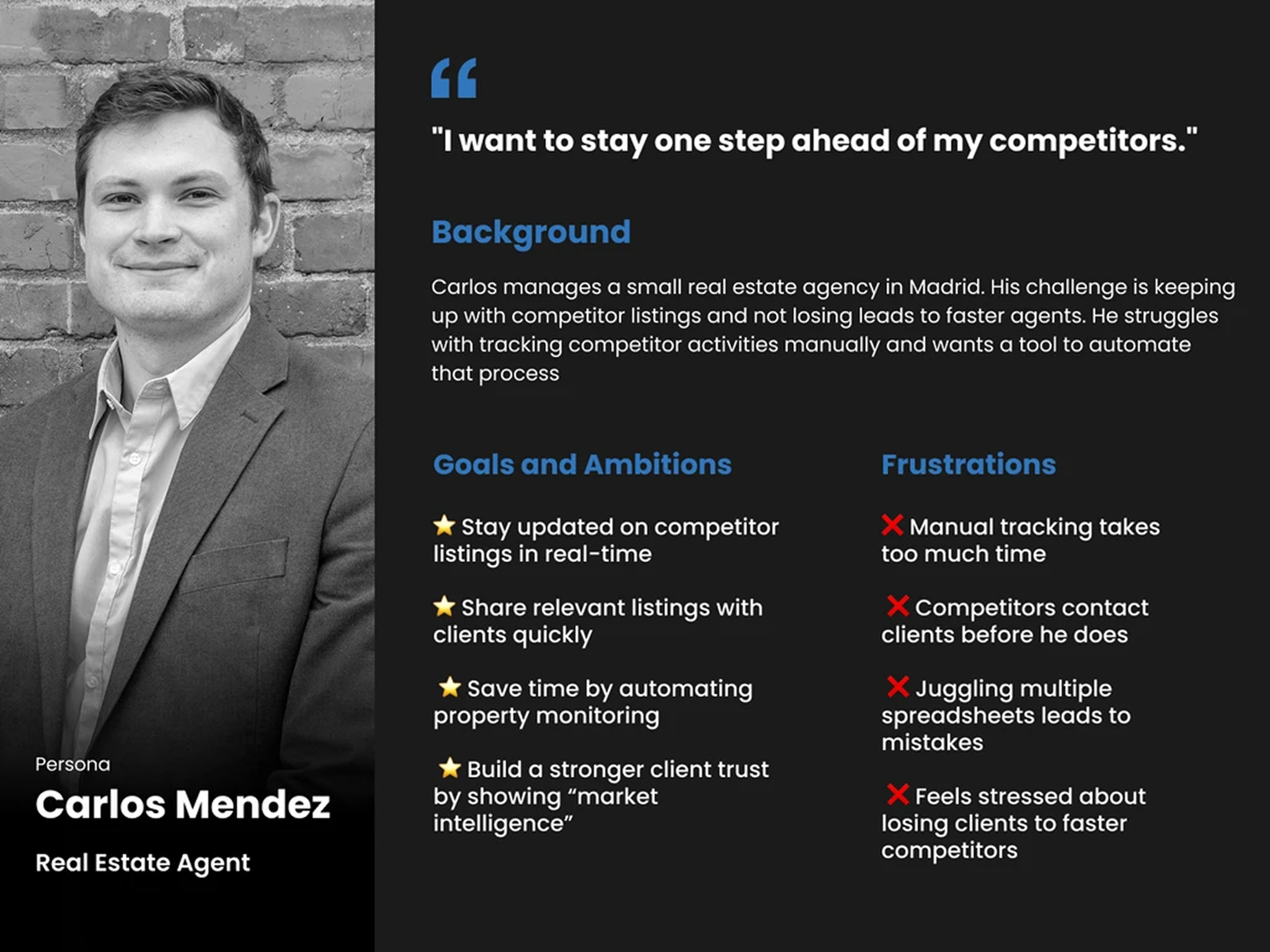
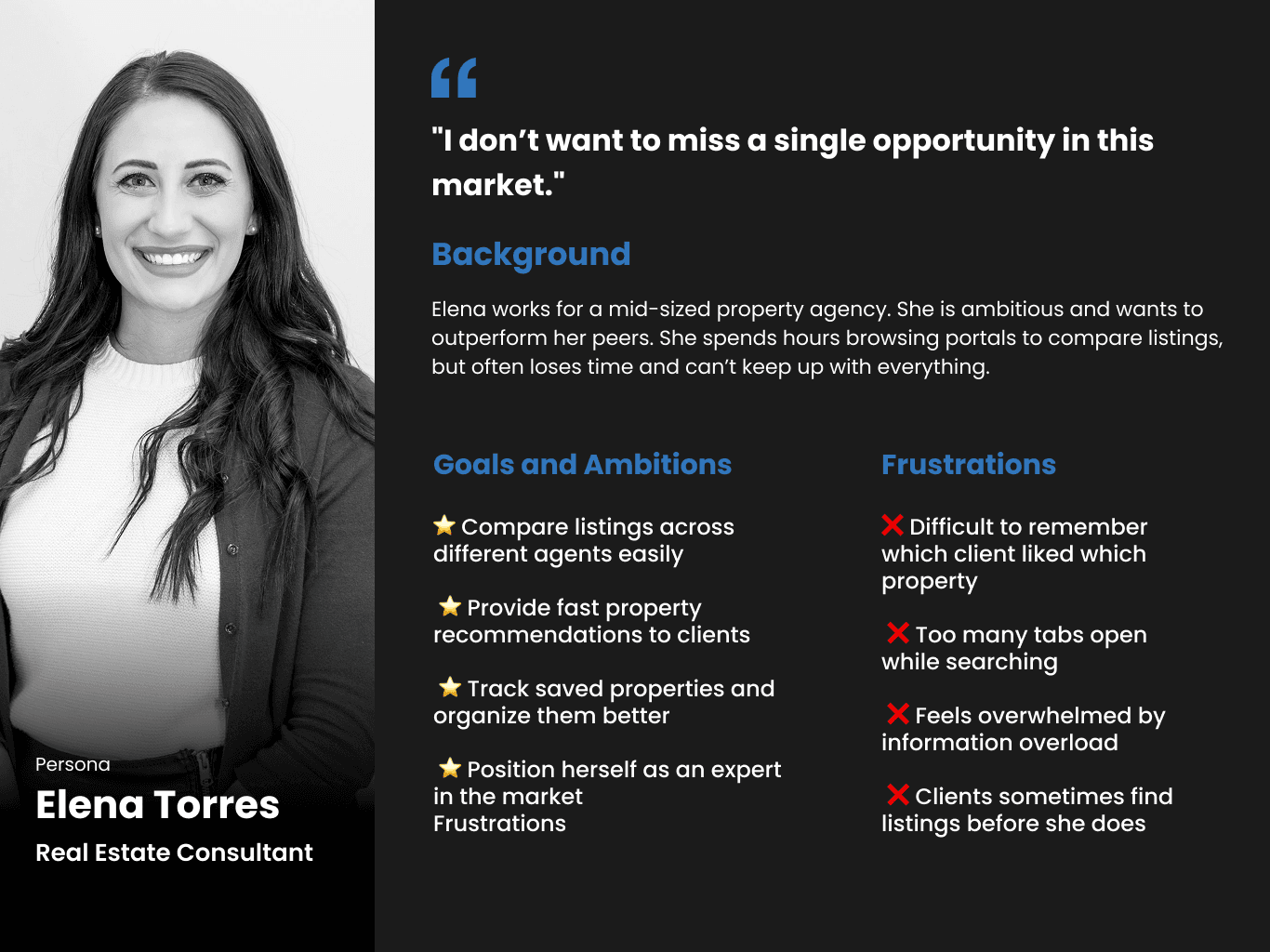
I turned what I learned into two personas based on real agents in Mallorca. The portals themselves weren’t the issue. The issue was everything agents had built around them: screenshots, WhatsApp threads and Excel sheets, all kept up by hand.
Ideas
I explored three directions and talked them through with the stakeholders.
- Concept AExplored
Competitor dashboard
Pull every competitor listing into one central view.
- Concept B✓ Chosen
Save and share folders
Collect competitor properties into folders, all in one place.
- Concept C✓ Chosen
Shareable weblink
Turn a folder into a link for clients that keeps itself up to date.
We went with the folders and the shareable link. Together they made agents faster and gave clients something genuinely useful, which the dashboard alone couldn’t do.
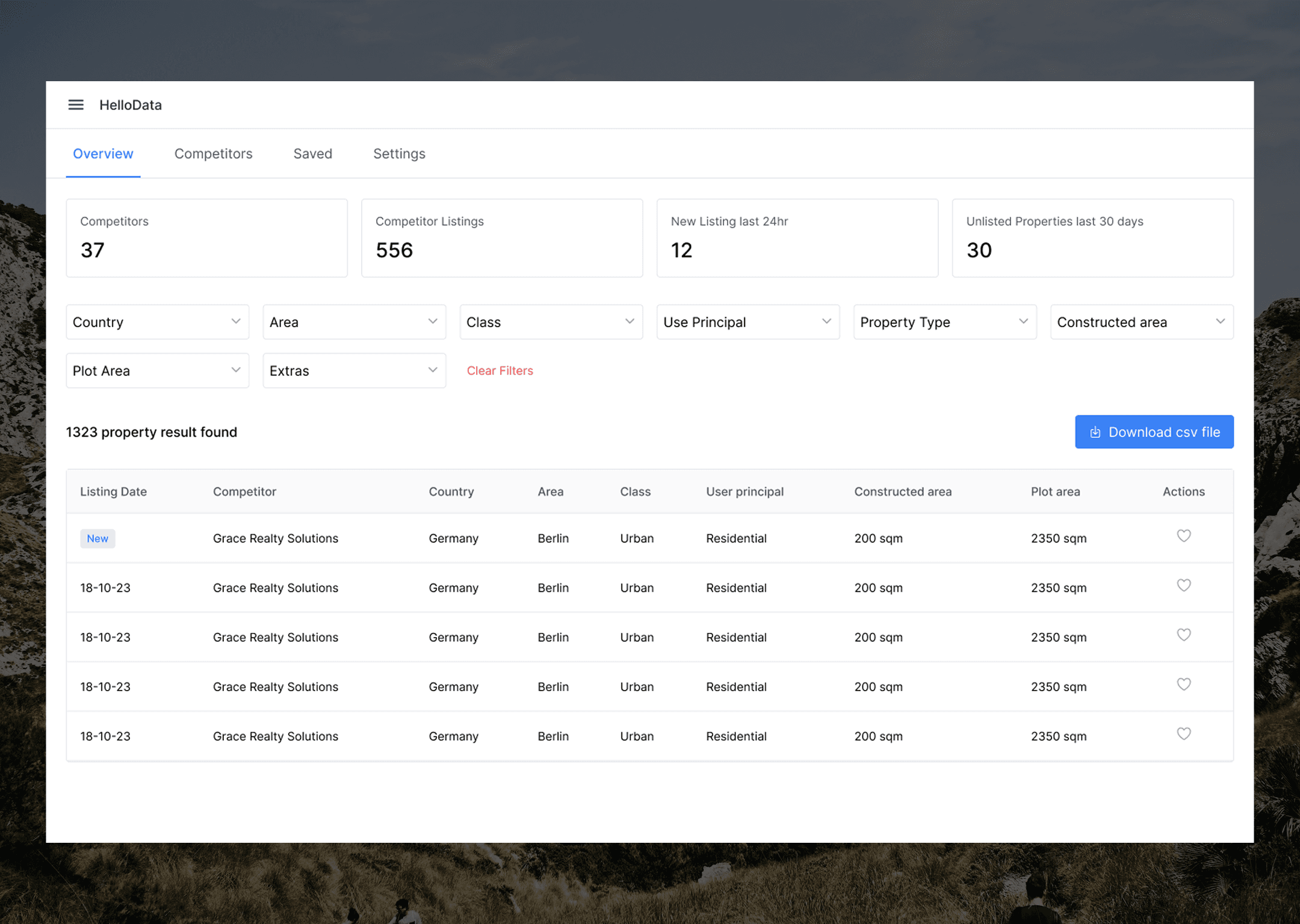
Three iterations
- Iteration 1A feature in the back officeTrack, save and organise. Nothing more.
- Iteration 2Easier to live withBetter organising and smarter defaults
- Iteration 3Its own productNew brand, live links for clients
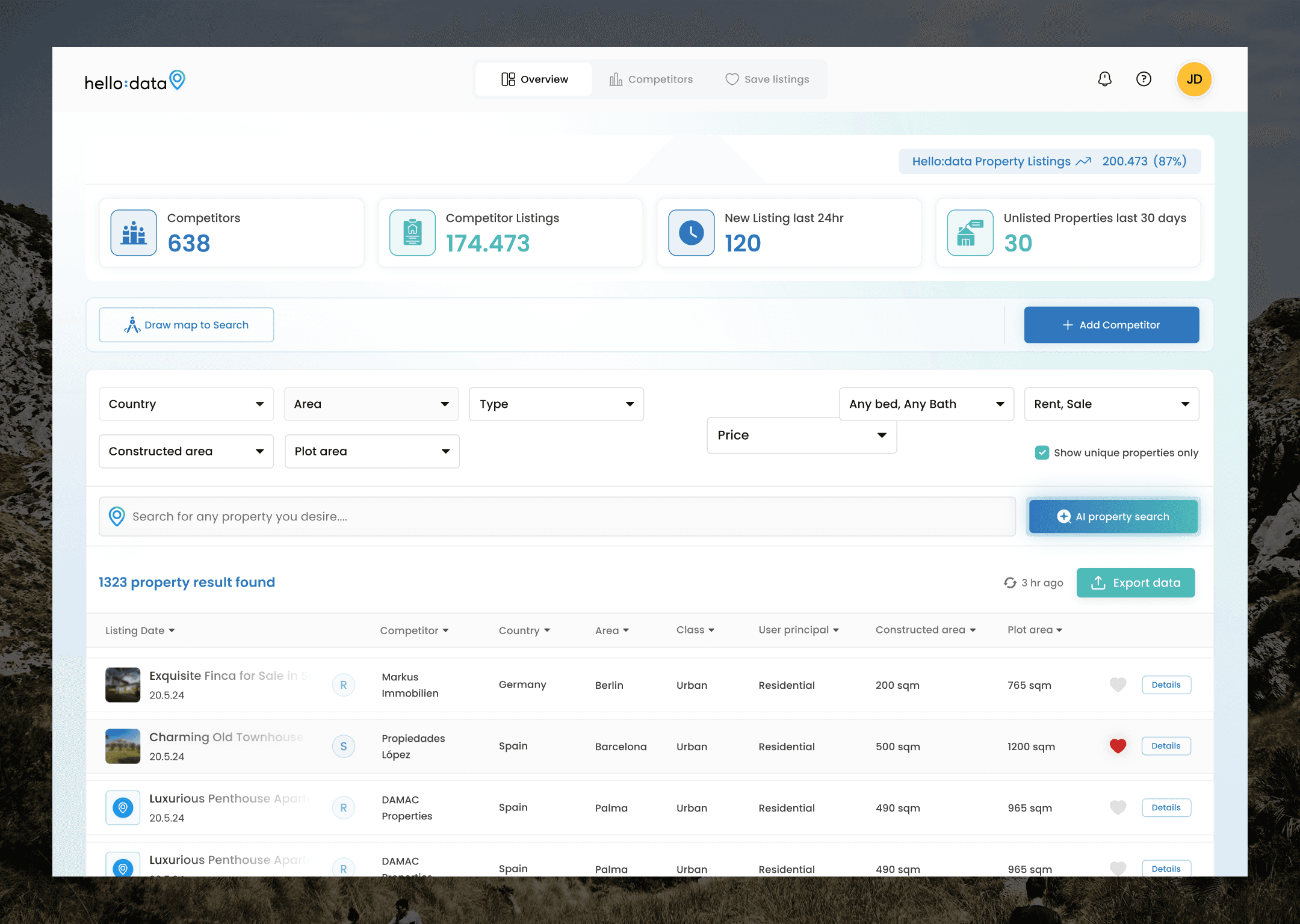
The first version lived inside our existing real estate back office. It was purely functional: agents could track, save and organise competitor listings, and that was it. Once they started using it every day, their feedback was clear. The idea worked, but it needed to be more capable and friendlier to use.
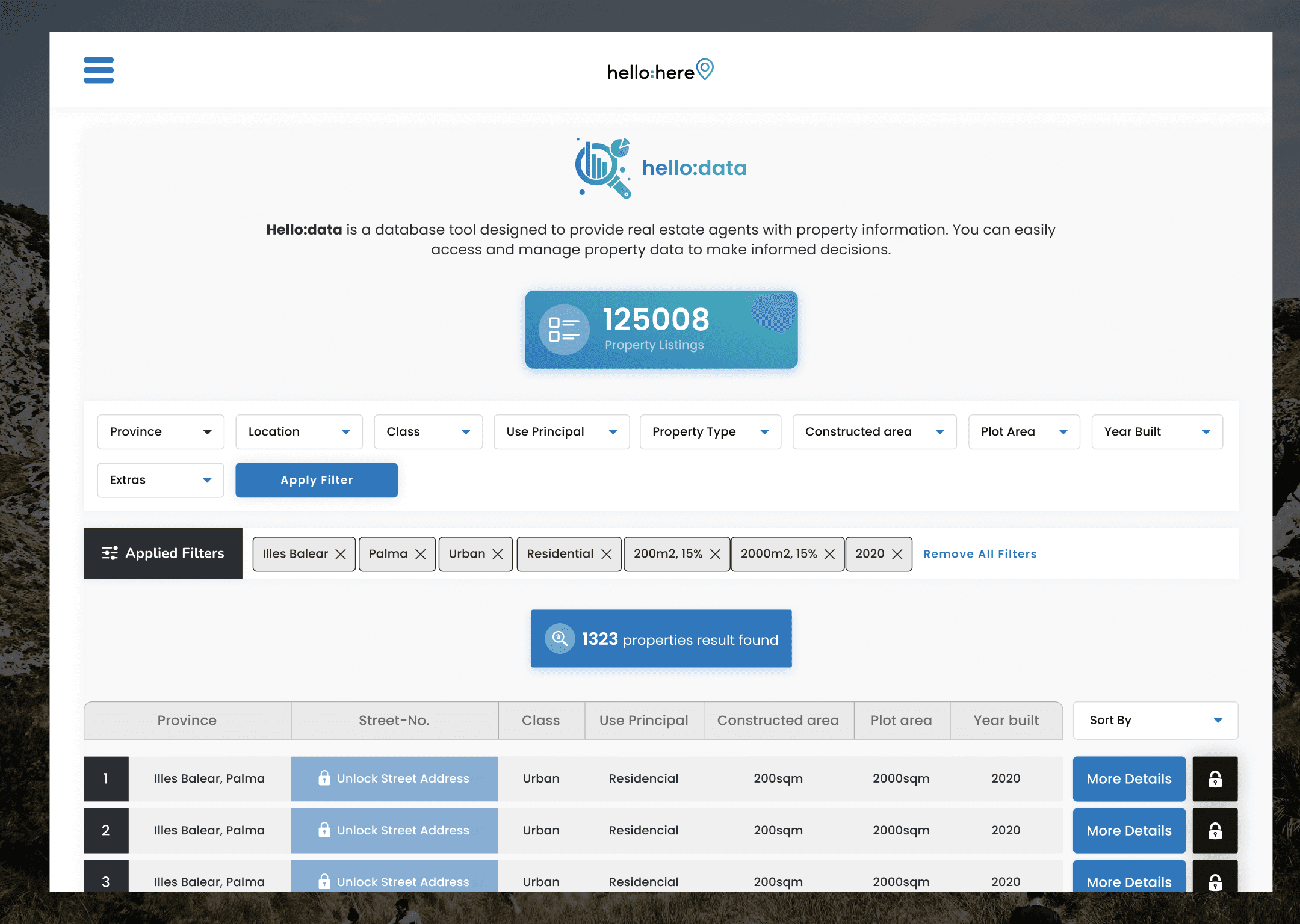
In the second round we improved how agents organise listings and added smarter defaults, so there was less to think about each day. It felt better, but we kept running into the limits of living inside the back office.
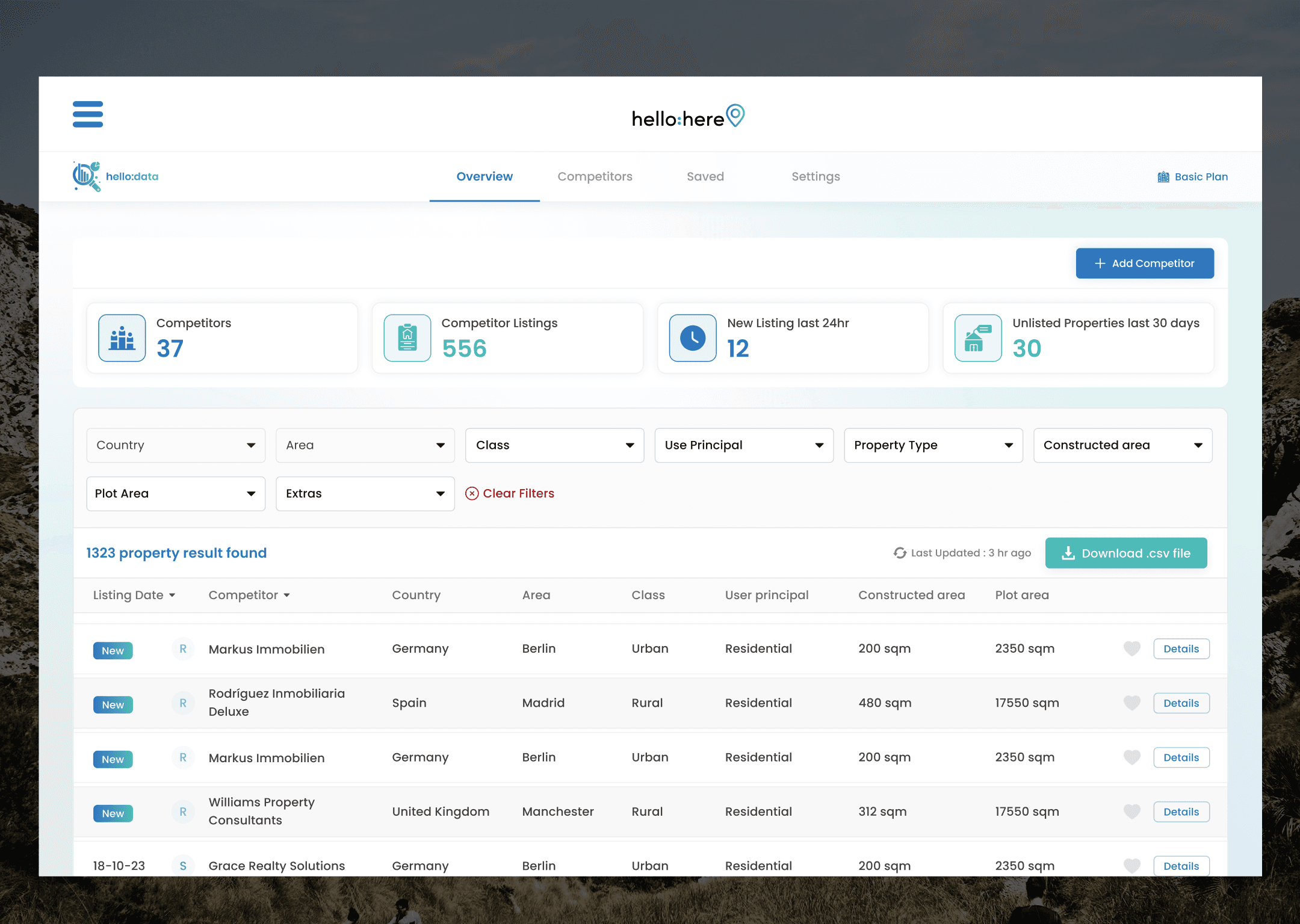
By the third iteration we made the call to turn it into a standalone product with its own name and identity. That changed how we could position it. It was no longer a back-office utility but something agents could put in front of clients, with live links that presented listings properly and helped build trust.
Testing it with agents
I ran usability sessions with five former agents. It went well.
Usability sessions with 5 former agents
- ValidatedEveryone saw the value of the shareable link straight away.
- ImprovedA few people hesitated when creating folders, so I simplified that step.
- ValidatedSaving, organising and sharing felt intuitive and clearly saved time.
This feels like magic. I can finally send clients something professional.
What we shipped
The final product came down to four things.
- 01
Competitor tracking
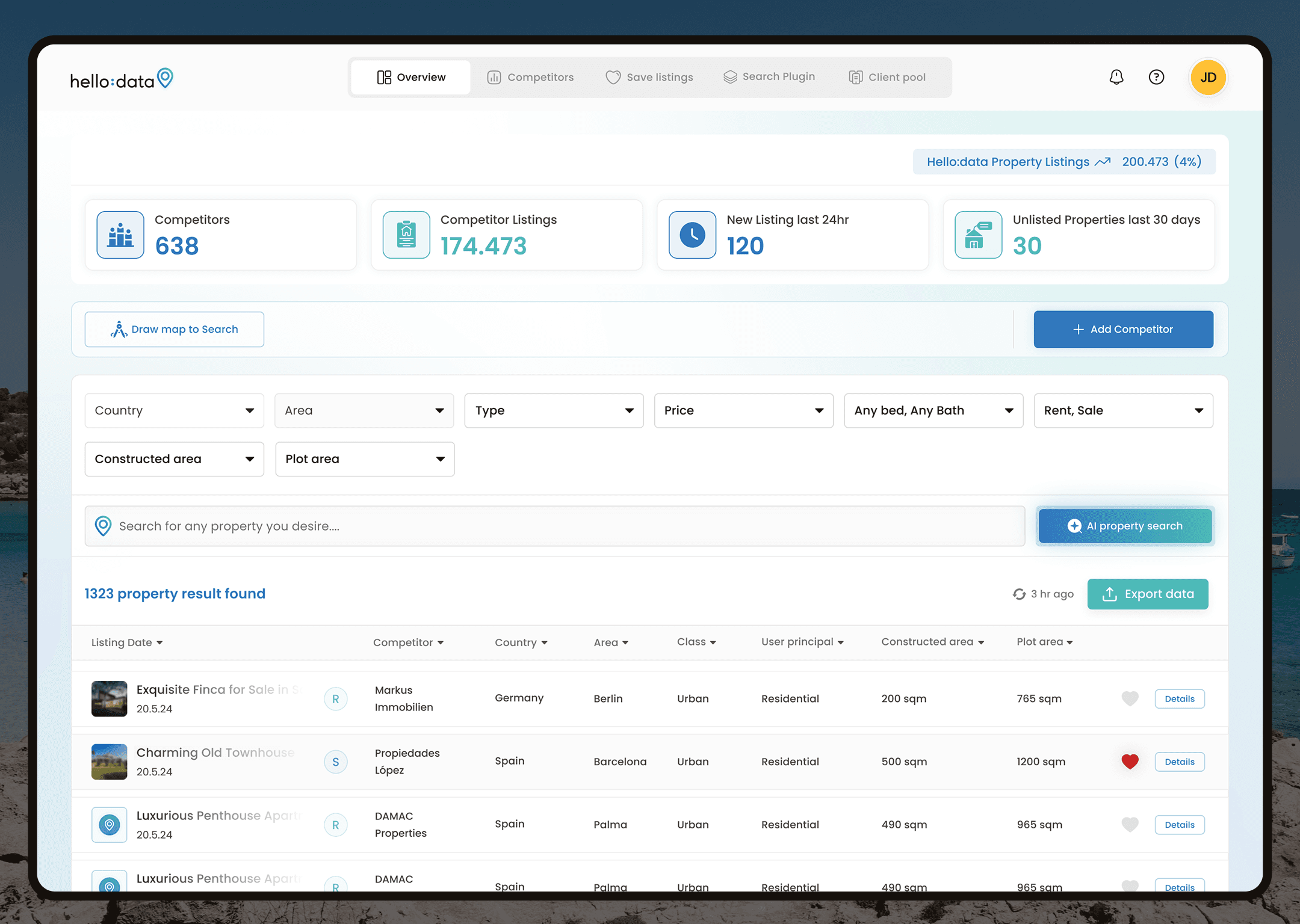
Agents follow competitors manually or automatically across thousands of listings and agents, so they always know what the market looks like.
- 02
Saved listings
Interesting properties go into organised folders instead of screenshots, WhatsApp threads and spreadsheets.
- 03
Shareable weblink
One click creates a clean, branded link that clients can open on their phone or laptop.
- 04
Client experience
Clients browse a curated shortlist without distractions and tell their agent which homes they like.
I kept the dashboard deliberately simple, so that agents who aren’t comfortable with technology could still use it with confidence.
- Check every portal
- Screenshots
- WhatsApp threads
- Excel sheets
- Client finds it firstTrust lost
- Track competitors
- Save to folders
- Share a live link
- Client browses
- Client picks favouritesTrust built
Agents got hours back, understood their market better, and could finally hold their own against the biggest names in Mallorca.
Results
- 40%Less time spent tracking competitorsTime agents now spend with clients
- 1Link instead of screenshots, chats and spreadsheets
Clients trusted their agents more, too. By sharing competitor listings openly, agents came across as advisors rather than salespeople. And smaller agencies finally had a professional tool that let them compete with larger firms.
What I learned
The simplicity of the final product is what made it work. Agents understood competitor tracking and clean client links immediately, and the light interface meant even the least technical people picked it up quickly.
- ValidatedKeeping it simple paid off. Agents got the value in seconds.
- ImprovedThe PDF export felt dated and clumsy, so live links replaced it.
- ImprovedFolder names confused people at first. Another design pass added smart defaults.
With more time, I would have built out the analytics. Agents could have seen pricing trends, where demand was heating up, and how they compared with other agents. I’d also have made the client side more interactive, so clients could favourite homes, leave notes or ask for a follow up right inside the link.
What I'd build next
- 1
Market analytics
Pricing trends, demand hotspots and comparisons between agents.
- 2
Richer client links
Favourites, notes and follow-up requests inside the shared link.
- 3
More ownership
There was no product manager, so I also ran the project. It taught me to weigh business goals, technical limits and user needs together.
This project asked me to take real ownership. With no product manager, I handled the coordination as well as the design and kept us moving from concept to launch. It made me a more rounded designer. It also reminded me that the best solutions are often quiet ones. They simply remove friction and leave people feeling more capable.
Looking back
hello:data started as a fix for one everyday annoyance in an agent’s job. Moving from clunky PDFs to a simple web tool gave agents a way to follow thousands of competitors, keep listings organised and share curated collections with clients. The work got easier, and the relationship between agent and client got stronger.
Good design isn’t about adding more. It’s about removing whatever stands between people and what they actually need to do.